


Ras Al Khaimah is one of the UAE’s most culturally rich places. The deep-rooted Emirati culture and traditions here are defining aspects of the emirate. From folk music to agricultural customs, the Emirati traditions here offer a glimpse into the Emirates’ authentic heritage.
Ras Al Khaimah traditions are passed down through generations. Many of these highlight the values of community and respect that are central to Emirati life. Here are some truly interesting Emirati traditions that are quite specific to Ras Al Khaimah:
Emirati Cultural Traditions in RAK
Al Wahabiyya Dance and Poetry
Folk music and dance are very important to Ras Al Khaimah. Al Wahabiyya is a traditional dance in the emirate performed by a group of dancers and drummers during special celebrations, feasts, and wedding occasions. The dance is based on a song in three sections.
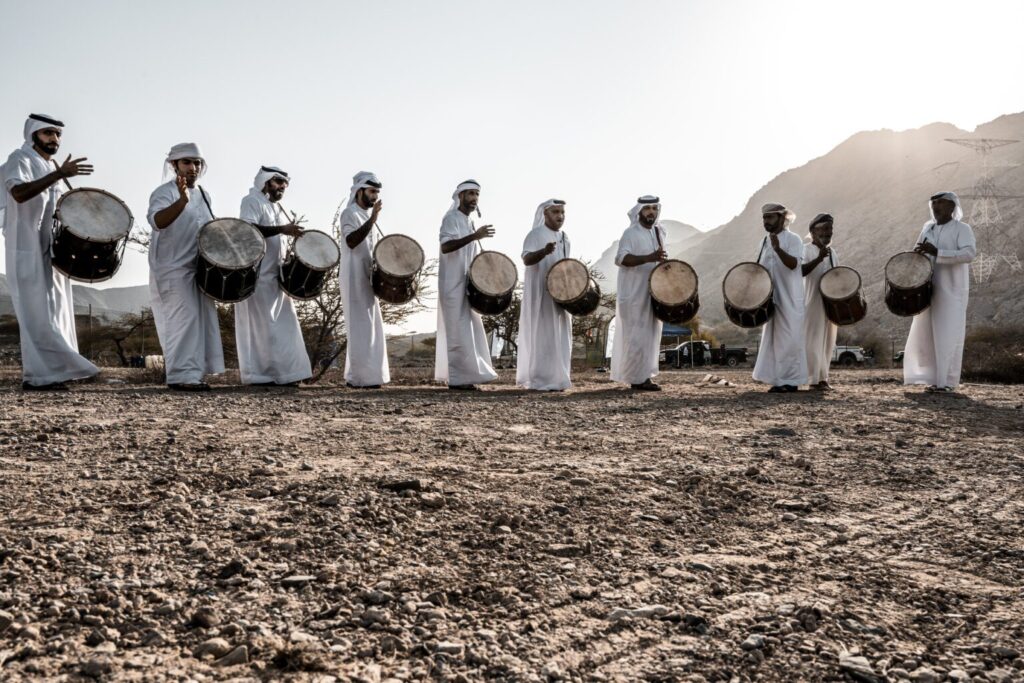
In the dance, drummers stand between two rows of performers. One performer recites lines of poetry, while others repeat the line, and this pattern continues. The drummers create a rhythm as the dancers move back and forth to the tune.
For ten minutes, the rows draw closer together until the performance concludes. Al Wahabiyya is performed with traditional costumes and accessories.
Al Sadu
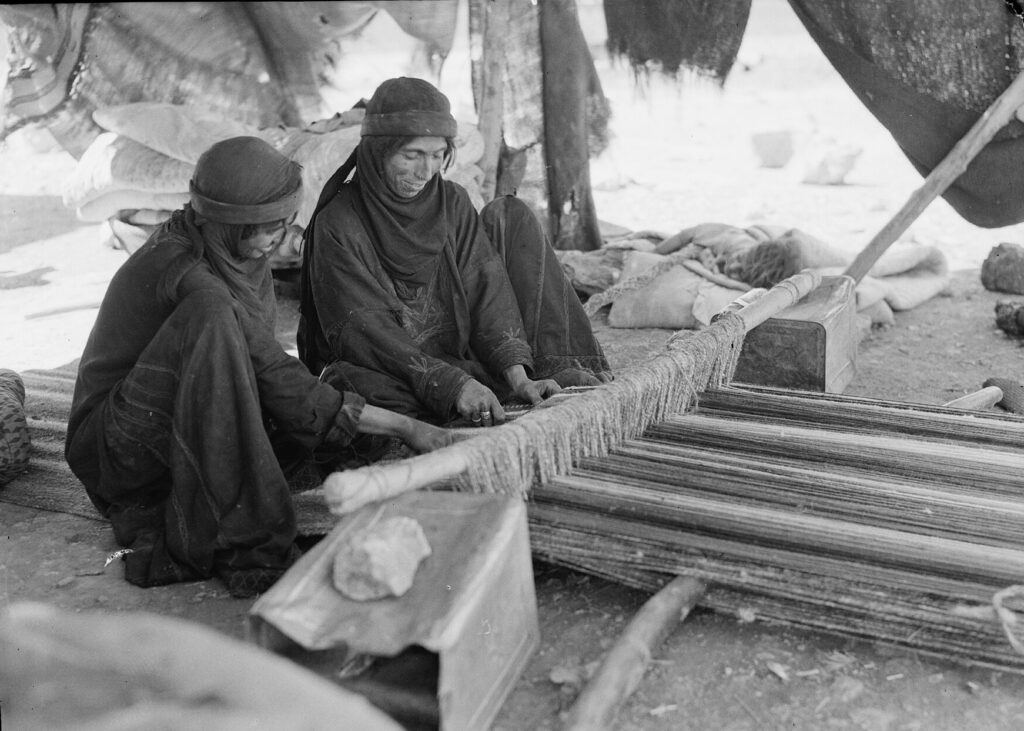
Sadu weaving is a very interesting part of Emirati textile traditions. These customs originated from Bedouin tribes who developed these methods to make tents, rugs, cushions and camel bags.
The craft is quite ancient and was often performed by Bedouin women. It consists of geometric designs, which are made by interlacing dyed woollen yarn over simple, plain warp threads on a ground loom.
While Al Sadu is very much a UAE tradition, Ras Al Khaimah is popular for workshops and studios that emphasise this tradition and keep it alive. Many of these Emirati textiles and crafts can be found at souks across the country.
Pearl Diving
Pearl diving and pearl fishing are popular traditions in Ras Al Khaimah, dating back over seven millennia. According to archaeologists, the emirate had a thriving pearl industry in the 12th century.
The industry flourished and transformed Ras Al Khaimah into a highly busy and important trading port in the region from the Middle Ages up to the Early Modern period.
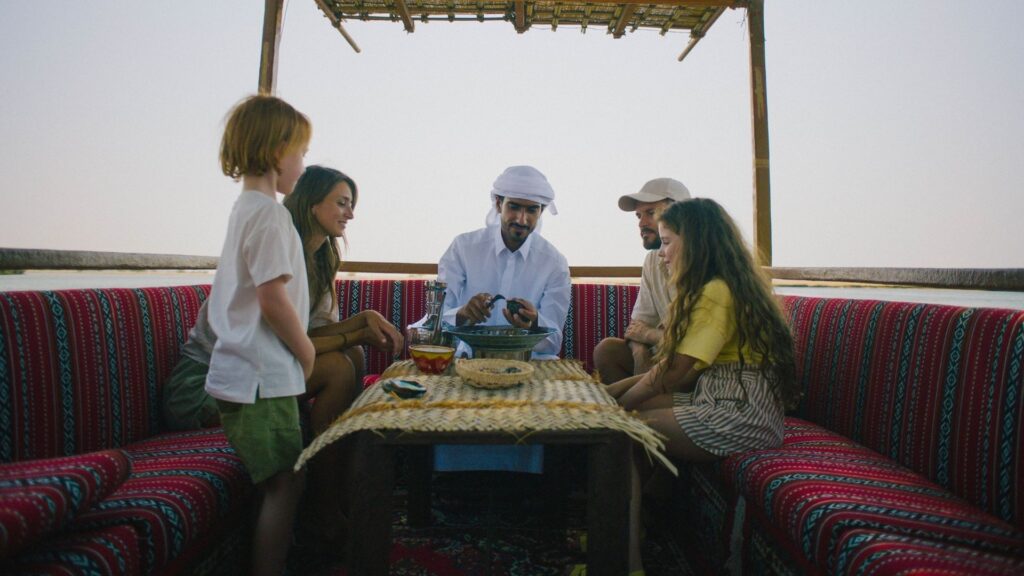
Many heritage and farm tours introduce the pearl diving tradition to inquisitive tourists. Traditionally, communities of men would dive for exotic pearls. Divers would use turtle shell nose clips while diving and plug their ears with wax.
Pottery Traditions in RAK
Pottery is an incredibly charming tradition of Emirati culture, kept alive in Ras Al Khaimah to this day. The emirate has a rich history of ceramics, including ancient Ubaid pottery and indigenous Julfar ware.
Ceramic artists use red clay from the mountains and green clay from underground to make earthenware, stoneware, tableware, and other objects.
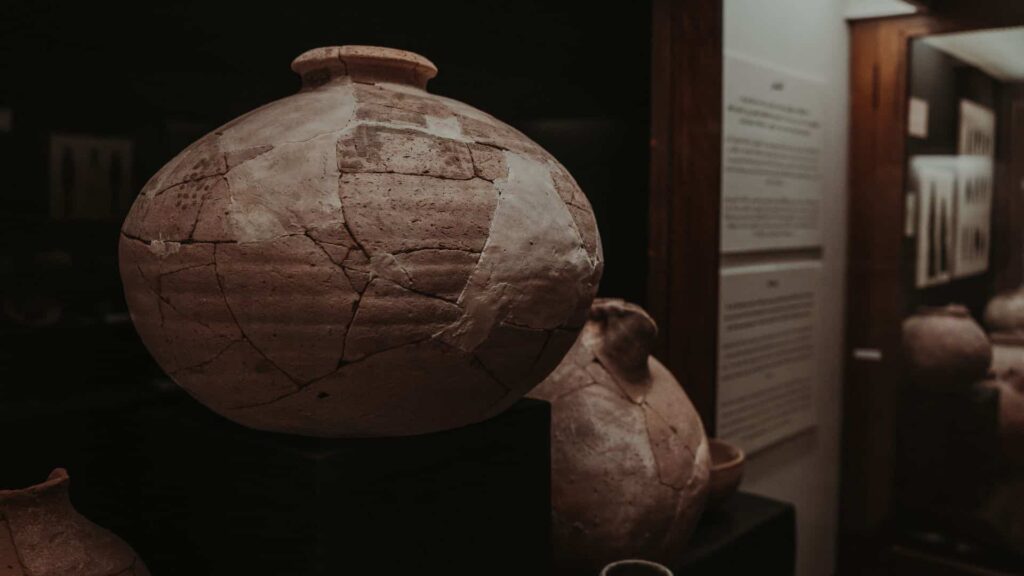
Julphar, the northernmost town in the emirate, has an entire hub for pottery and ceramics.
Many ancient Emirati pottery techniques persist today as traditions in RAK. Clays are often combined, refined and smoothed with large sticks. After sieving it to filter out stones and other elements, the clay is moistened with water. Once the vessel is ready, it is fired in a kiln.
Grain Pounding
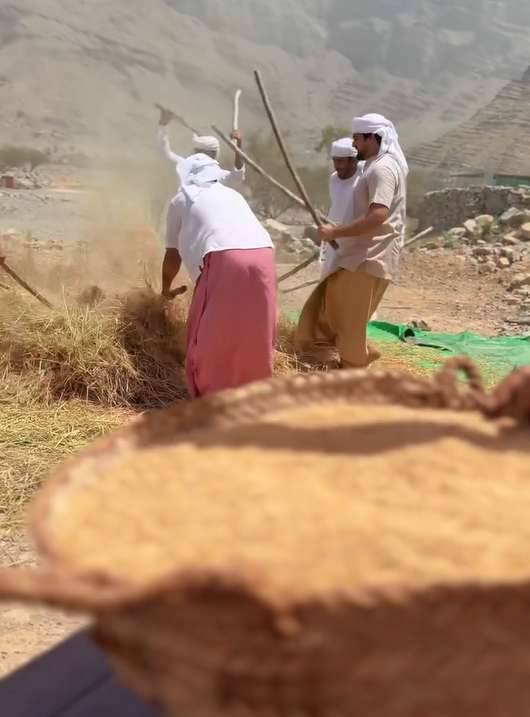
Grain pounding is an important agricultural tradition in Ras Al Khaimah, performed by local residents after wheat and barley harvest.
The grain is dried and pounded with traditional tools. The main traditional method involves separating husks from the grain, cleaning it and preparing it for use.
This process is very time-consuming and involves sorting, cleaning, and aeration until the grain is ready for milling and storage.
The enduring traditions of Ras Al Khaimah offer a meaningful insight into the heart of Emirati culture.
As the emirate continues to grow as a modern tourism destination, its commitment to preserving heritage ensures that future generations and visitors can continue to appreciate its rich customs, values and humble ways of life.
Explore more Ras Al Khaimah news, events, festivals, and local experiences on The Ras Al Khaimah Atlas.